Issue #5 · Monday, 26 October 2026
Moonshot's Kimi K3.1 Pro ranks fourth; weights due Nov. 4
One big model release this stretch, and mostly skeptical or practical stories around it. The recurring question was whether the money and the model size are buying anything, and the answers were mixed.
The big one
Moonshot launches Kimi K3.1 Pro, with open weights promised by Nov. 4
Kimi K3.1 Pro is a multimodal mixture-of-experts model with 2.8T total and 104B active parameters and a 1M-token context window. Artificial Analysis ranks it fourth at 55, behind Opus 5.5 (58) and Sonnet 5.5 and Muse Wonder Full (both 56). The API is live. A Highspeed tier is 2–3× faster, reportedly at twice the price. Reaction is mixed: inference cost, uneven results on some tasks, and uncorroborated claims of undisclosed paid promotion.
Why it matters: If the weights arrive on schedule, this would be one of the largest open-weight models to land near closed frontier systems on independent benchmarks.
Sources:Latent Space,cerebras.ai,HN discussion,Interconnects
Read the briefing →Models and pricing
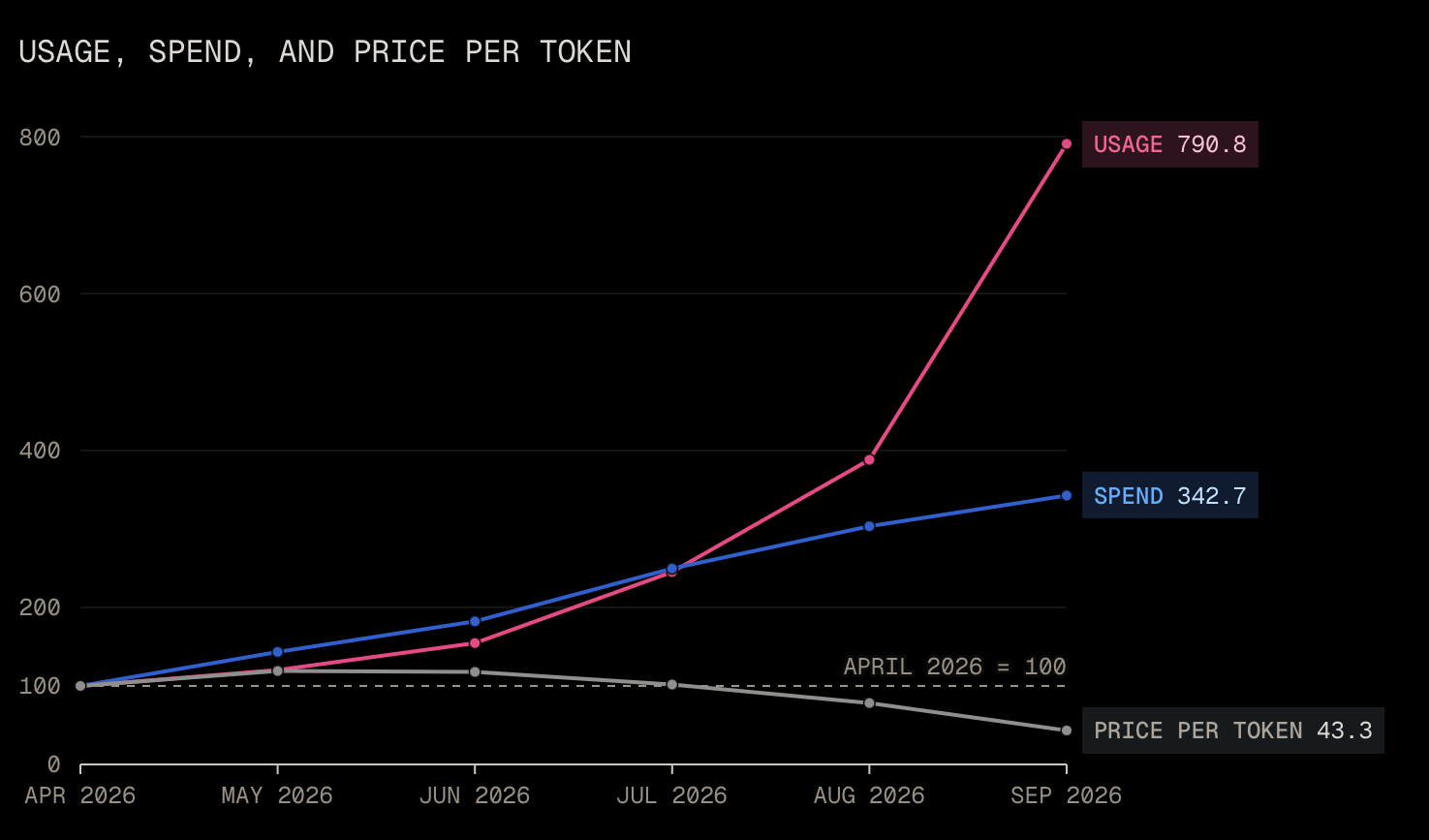
OpenAI and Anthropic have cut LLM prices by up to 80% in a few months
Max Woolf (minimaxir) notes that OpenAI and Anthropic have cut LLM prices by up to 80% within a few months, and asks why. The piece is one writer's analysis rather than new reporting, and the material here doesn't say which models were cut or by how much each one dropped.
Why it matters: If prices keep falling this fast, the cost of building on frontier APIs gets harder to forecast and cheaper to bet on.
Sources:minimaxir.com,HN discussion

Block announces Dessa, a conversational model it says was trained only on human conversation
Jack Dorsey's Block announced Dessa, a conversational AI model it says was trained from scratch on only human conversation. The sample chats it shared are sometimes awkward. A separate report describes the voice model as highly human-like and able to run locally on a MacBook M4 Max.
Why it matters: Quality looks early, but a from-scratch conversational model that can run on a laptop is an unexpected entrant from a payments company.
Sources:The Verge,TechCrunch
Money and policy

Apollo finds no sign of an AI payoff outside the tech sector
Apollo's analysis argues there are no signs yet of an AI payoff in economic data outside the tech sector. An Apollo economist put it more bluntly, saying AI has delivered zero financial payoff to corporate America outside of tech, despite massive investment and hype.
Why it matters: It sharpens the argument that the gains so far are concentrated in tech, which matters for anyone judging how long the spending can run.
Sources:apollo.com,HN discussion,TechCrunch

Pennsylvania will require labels on AI-generated ads
Governor Josh Shapiro signed the Artificial Intelligence Deceptive Advertising Act. Ads that are significantly modified or generated by AI will have to carry a label, and the label must appear in the same format as the ad itself. The material doesn't give an effective date.
Why it matters: Disclosure rules for AI ads are arriving at the state level, giving advertisers and generative tool makers a concrete requirement to plan around.
Sources:The Verge
Research worth reading

A 10-year-old CNN outperforms frontier LLMs at diagnosing skin cancer
A 10-year-old convolutional neural network outperformed frontier LLMs at diagnosing skin cancer, according to a write-up on lynchlab.net. The source summary doesn't give accuracy figures or say which LLMs were tested, so treat it as a pointer to the work rather than a benchmark result.
Why it matters: Narrow, older, purpose-built models can still beat general-purpose LLMs on specialized medical tasks, which tempers the case for defaulting to a chatbot.
Sources:lynchlab.net,HN discussion

Forced to pick, Grok recommends Republicans and OpenAI's GPT picks Democrats
A new study found that when forced to choose, xAI's Grok recommends Republican candidates while OpenAI's GPT favors Democrats. The two models disagreed in over 90% of nearly 500 races. TechCrunch reported the findings; the material doesn't say which model versions were tested.
Why it matters: Chatbots lean in different directions on elections, and the choice of assistant can shape the advice a voter gets.
Sources:TechCrunch
In brief
- Swedish government offices are set to ban the use of ChatGPT and Claude. →
- r/opensource moderators banned projects that use, are made by, or are intended for AI, plus non-English posts. A rival subreddit, r/trueopensource, followed. →
- The Verge looks at how Google's AI search changes upended online publishing, which long depended on Google traffic and search optimization. →
- Apricitas Economics asks how much of the roughly 200,000 US jobs lost in media, film and the arts can be pinned on AI. →
- OpenAI explains how its Habitat storage system, using multi-tenancy, global caching and Azure Cosmos DB, got 12x faster reads for ChatGPT's 1 billion-plus users. →
- Grok released the first seven minutes of its AI-generated film 'Odyssey'. TechCrunch calls it passable but lacking artistry and human interest. →
- AI tools are speeding up retro game decompilation, producing viral ports like Halo in a browser and Wind Waker on iPhone, and straining preservation communities. →
- A Nikon photography contest winner lost the title after scientists found signs the winning image was AI-generated. →
- A UC Berkeley math professor says AI use by students leaves him seeing no point in grading homework. →
- PaperPilot is an open-source, pure-Rust PDF engine that runs locally with no cloud, compiles to WASM and exposes an MCP interface. →
How was this issue?
That’s it for #5. The next issue lands Wednesday morning.
Javier Díaz, Context Window